
Copper theft gets categorized as property crime, which is why it is chronically under-funded as a problem. Measured properly, by what the theft actually causes downstream, it is one of the most expensive recurring events on a transit network.
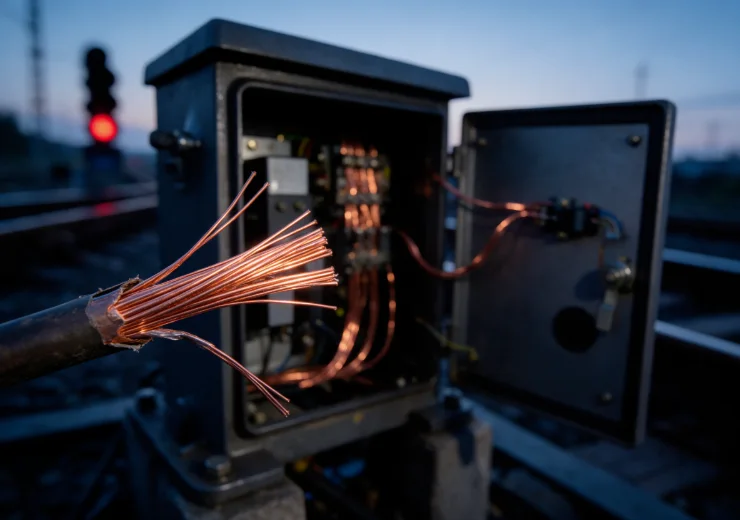
The scrap value of the copper taken in a typical cable theft is small: a few hundred dollars at a recycler. The cost to the agency is not. Cutting signaling or communications cable takes a segment out of service, and everything that follows is triggered by that one cut: emergency crew dispatch, cable replacement, single-tracking or bus bridging, delay compensation and overtime.
The multiplier agencies report typically runs 10× to 100× the scrap value. The variance is not about the theft; it is about which cable was cut and how long the segment stays degraded.
A signaling failure does not cost the sum of its parts. It cascades. Trains hold, headways stretch, crews time out, and the schedule recovery consumes resources for hours after the physical repair is finished. On a busy corridor a two-hour outage can disturb a full service day.
There is a second, slower cost: every unexplained delay erodes rider confidence, and rider confidence is the metric agencies are asked about publicly. Theft that is invisible in the crime statistics is very visible in the on-time performance numbers.
Most agencies learn about cable theft the same way: a system reports a fault, a crew is sent, and the crew finds the cut. Detection happens after the damage, sometimes hours after the thief has left. The incident record that results captures the repair, not the event, which is why the true frequency is usually undercounted.
That gap matters for funding as much as for operations. If the record only shows repairs, the business case for prevention is built on a fraction of the real number.
Four figures make a defensible internal estimate: cable-theft incidents in the last 24 months, average direct repair cost per incident, service hours lost per incident, and emergency response cost per incident. Multiply, then add any claim or liability exposure attached to the resulting service failures.
Most agencies that run this exercise find the annual figure is larger than the cost of covering their highest-risk segments with detection.
Acoustic sensing and computer vision tuned to cutting and tampering move detection from post-failure to in-progress. That single shift changes the response from repair to interruption, and it converts an unpredictable operating cost into a monitored, managed risk.
It also produces something agencies do not currently have: an accurate record of how often the corridor is actually being targeted, which is the evidence base for everything from patrol allocation to the next grant application.
Request a briefing and we will work through the cost math for your own corridor.